March the 25th, 2026 / PRESS RELEASE
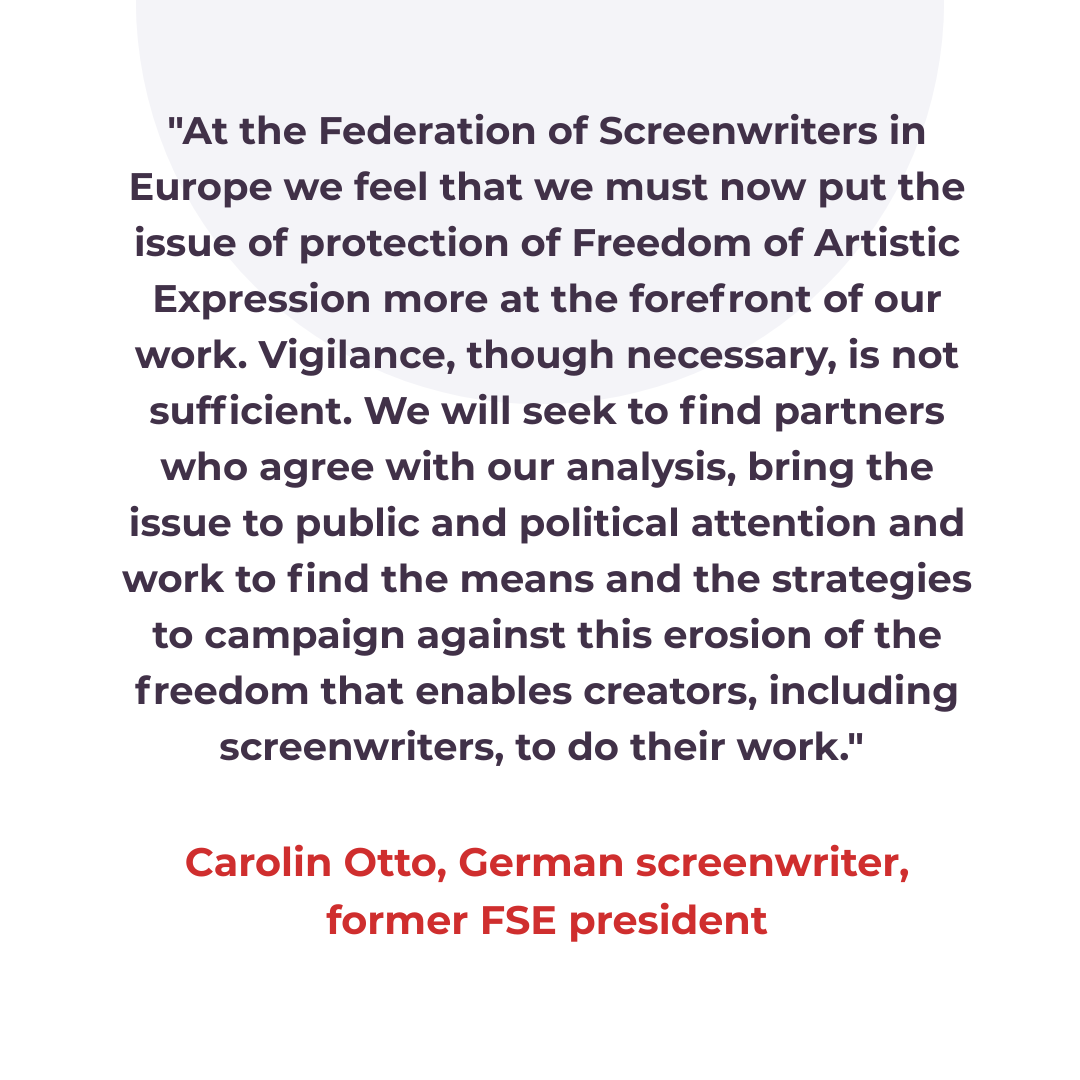
The Federation of Screenwriters in Europe publishes a report on the threats to freedom of expression in the audiovisual and film sectors, entitled: Right to Write: Screenwriters and the Growing Threats to Freedom of Artistic Expression in Europe.
Driven by its 31 member guilds across 27 European countries, representing nearly 10,000 screenwriters, the FSE aims to contribute to ongoing efforts to monitor and defend freedom of expression as a fundamental freedom, already undertaken by numerous organisations across Europe, particularly in relation to journalism and media independence, by providing an analysis focused on the field of audiovisual creation.
The report examines how threats that have already been widely identified in other areas of freedom of expression are also manifesting within the field of audiovisual creation, with a particular focus on the situation of screenwriters.
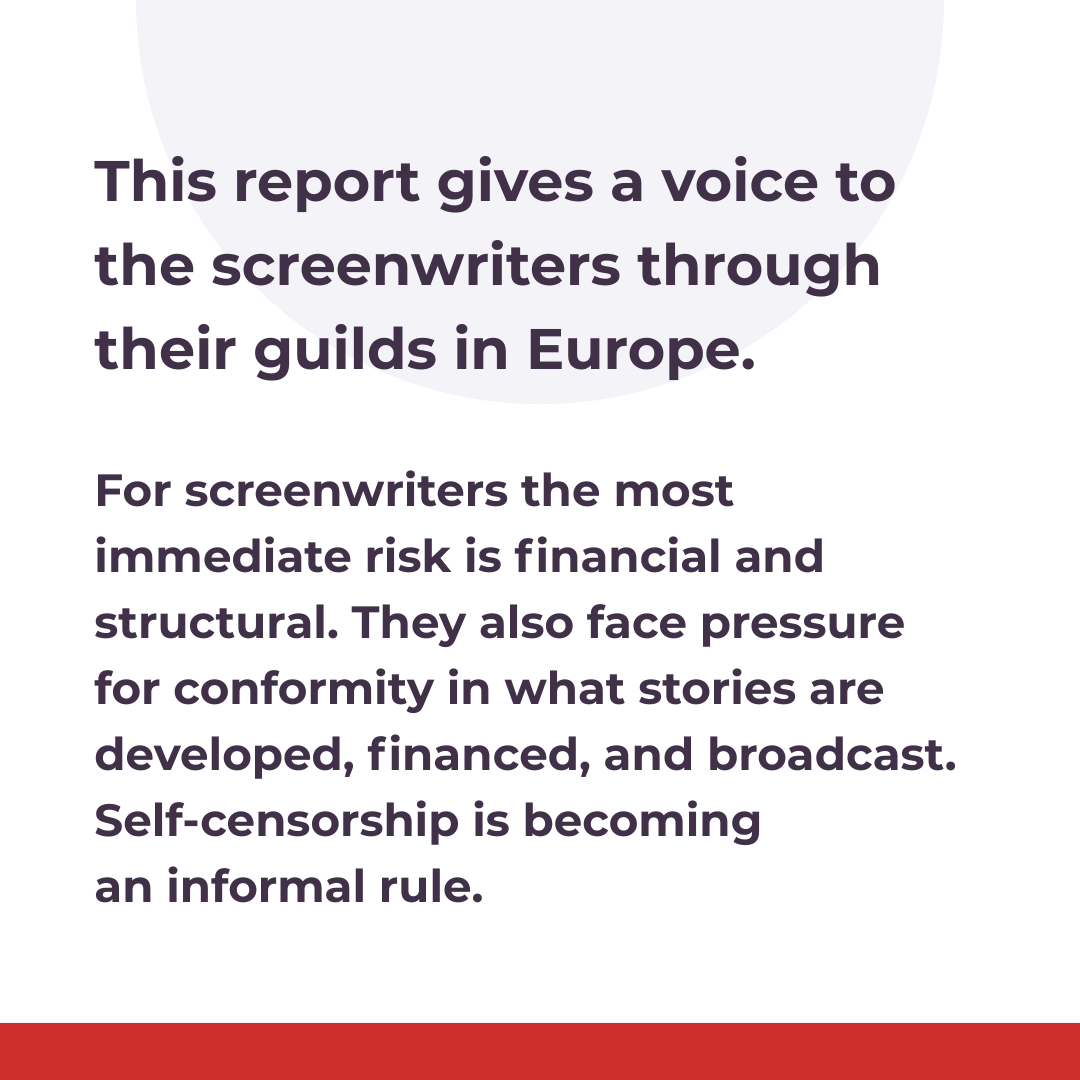
It recalls that project selection is inherent to the screenwriting profession and cannot, in itself, be equated with censorship. However, many screenwriters report that the boundary between selection and the control of which stories are considered acceptable is increasingly being eroded, in a context marked by subjective decision-making, contractual imbalance, particularly during development phases, and attempts to exert narrative control for political or ideological purposes.
This situation may also generate a “chilling effect”, whereby screenwriters anticipate such constraints and adjust their creative choices at an early stage of development.
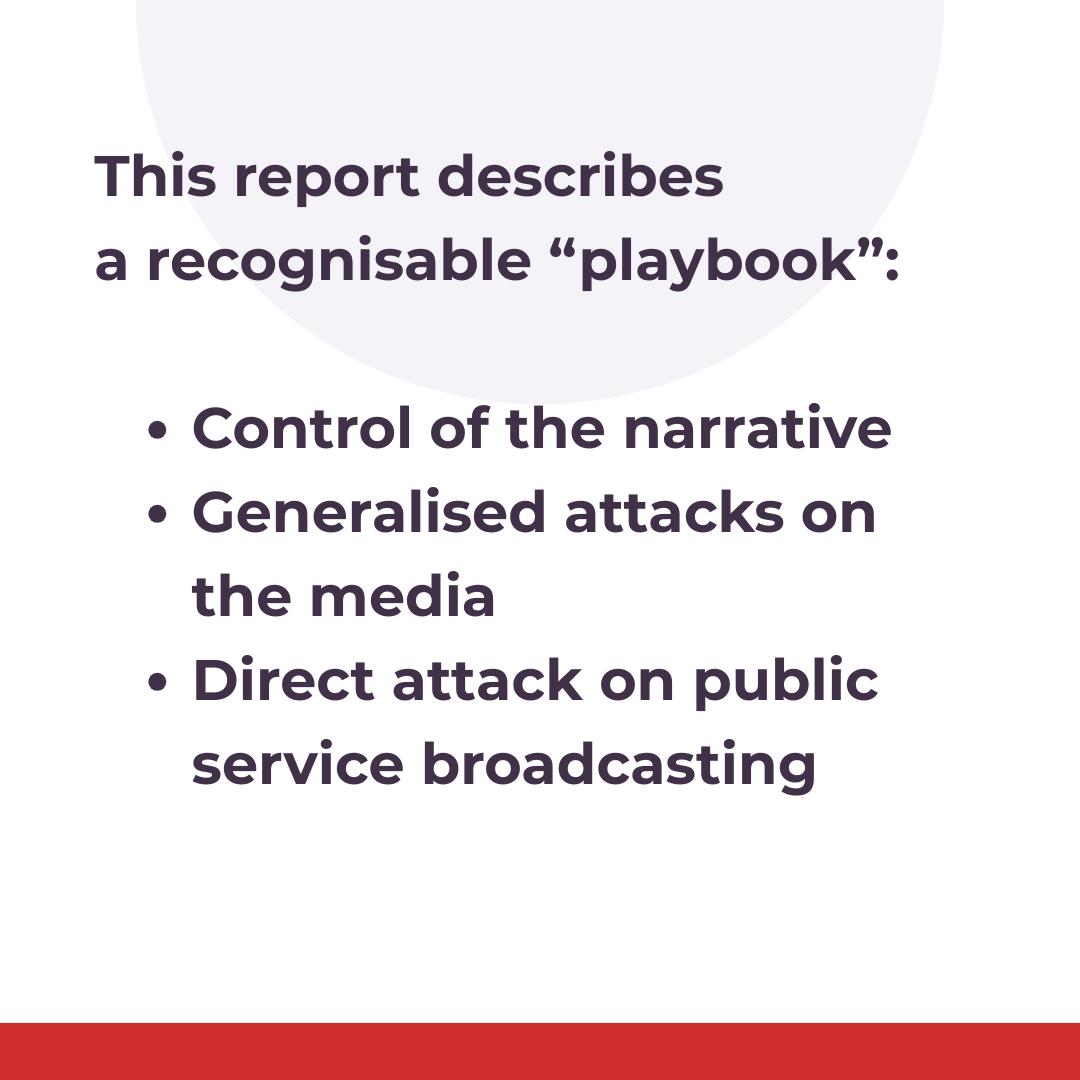
The report highlights the existence of structured political and ideological frameworks in which the undermining of freedom of expression appears as a determining factor in the pursuit of power, taking the form of a “playbook” that can now be observed internationally.
This playbook is characterised by recurring mechanisms: the weakening of shared frames of reference, the delegitimisation of established sources of information, the promotion of simplified and homogenised narratives of the past, often at the expense of social complexity and principles of equality, and the progressive restriction of what can be said, shown, or even imagined.
In this context, the report also underlines the importance of audiovisual funding systems in Europe, and in particular the role of public service broadcasters. The challenges facing these institutions may have direct consequences for the conditions of creation, the diversity of works produced, and, more broadly, the pluralism of cultural expression.
The FSE will continue to develop and structure its work on these issues, in cooperation with its member guilds and all relevant stakeholders, in order to document and analyse, at the European level, developments affecting freedom of artistic expression in the field of audiovisual and film writing.
PRESS
Broadcast International
European PSBs eye bold series amid polarisation
Screendaily
The rise of far-right politics is threatening freedom of expression, warn Europe’s screenwriters
The Hollywood Reporter
https://www.hollywoodreporter.com/tv/tv-news/far-right-attacking-artistic-freedom-say-euro-screenwriters-1236543860/
Cineuropa
https://cineuropa.org/fr/newsdetail/490840
Broadcast International
European screenwriters warn of far-right impact on creative
Deadline
https://deadline.com/2026/03/donald-trump-far-right-self-censorship-fse-writers-1236762854/