News on Strengthening Guilds
FSE AGM 2025
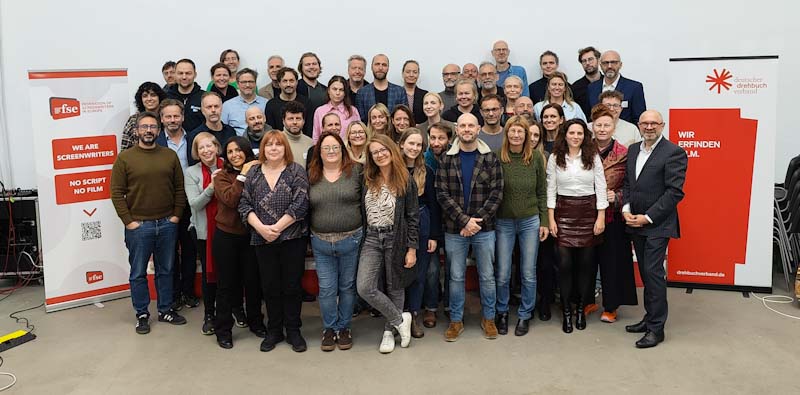
FSE AGM 2025
European screenwriters gathered in Berlin made strategy decisions in a context of growing threats against freedom of artistic expression and challenges to authors’ rights in the area of Artificial Intelligence.
In Spain, FSE member FAGA becomes Unión de Guionistas
Spanish screenwriters guild changes name to highlight growing capacity in defending professional interests and rights of screenwriters in several regions of Spain.
European fight for authors’ rights: FSE and DDV host the first European Screenwriters’ Day in Berlin
At the first edition of the European Screenwriters Day in Berlin, screenwriters from Germany and all over Europe are gathering to exchange views on their job as screenwriter in a context of threatened freedom of artistic expression and incredibly fast development of Artificial Intelligence.
Denis Goulette appointed new FSE Délégué Général
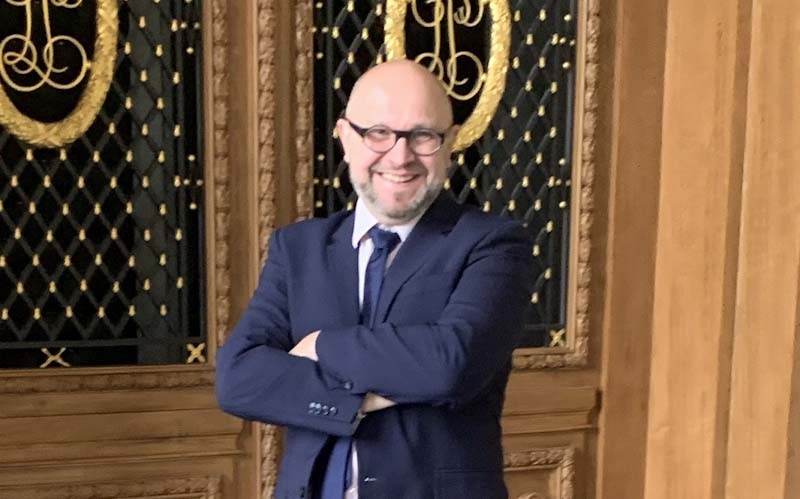
French lawyer Denis Goulette appointed new FSE Délégué Général to represent the interests of 34 screenwriters’ organisations across Europe. He has taken over from FSE Executive Officer David Kavanagh.
Collective Bargaining for Screenwriters and Directors. Results of a joint FERA-FSE-UNI MEI programme

FERA, FSE and UNI MEI set up a programme to build capacity among audiovisual authors’ guilds and professional organizations in Europe to bargain collectively in the context of the implementation of Title IV, Chapter III of the 2019 Copyright Directive.
Screenwriters everywhere in support of WGA strike!
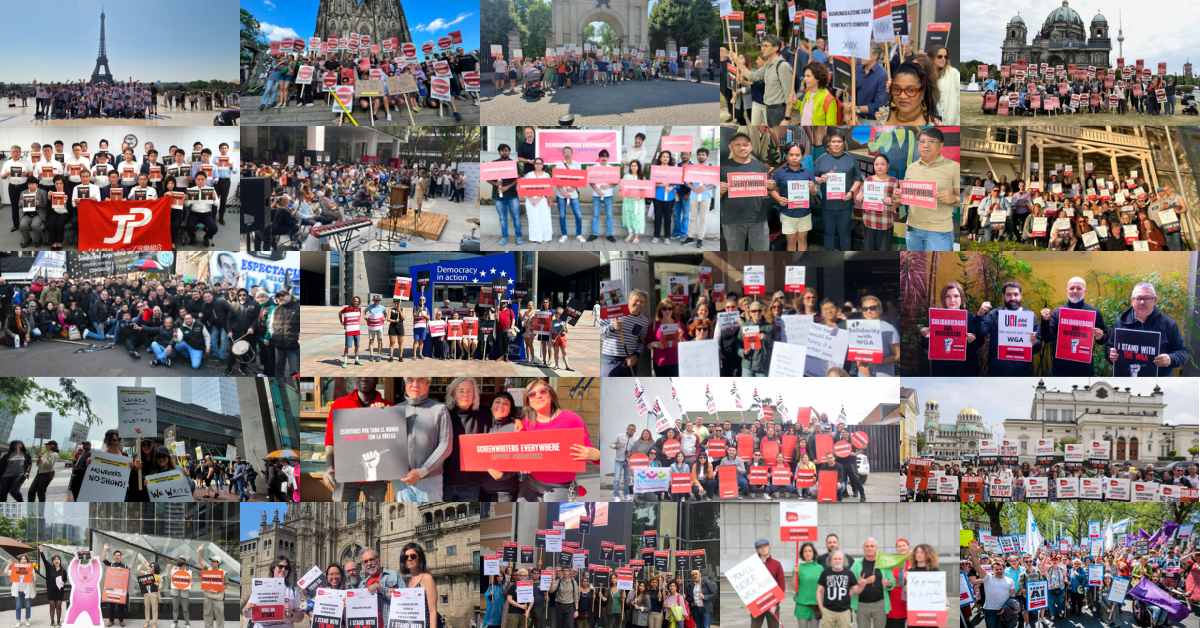
14 June 2023 – #ScreenwritersEverywhere – An international day of solidarity with the American screenwriters on strike. Members of WGA West and East, FSE, IAWG and UNI-MEI organised pickets and other actions in more than 30 countries to support the WGA strike.
PRESS RELEASE – 14 June Screenwriters Everywhere. Global Day of Action & Solidarity with WGA Strike
June 14, “Screenwriters Everywhere”, a day of global solidarity with the WGA strike. Members of the Federation of Screenwriters in Europe (FSE), International Affiliation of Writers Guilds (IAWG), UNI Global Union (UNI-MEI), and other supporters will hold events around the world.
Webinar for Screenwriters and Directors’ Organisations on Copyright Directive Transposition

News on the 2019 Copyright Directive transposition process and available formats to collective mechanisms allowing for an effective implementation of its provisions related to authors’ and performers’ fair remuneration in exploitation contracts.
Freelance audiovisual authors: a workshop on Competition law and collective agreements
FERA-FSE-UNI MEI Hold Third Online Workshop “Competition law and collective agreements on freelance audiovisual authors’ working conditions”
FERA-FSE-UNI MEI Hold Second Online Workshop “Building a Collective Bargaining Campaign”
FERA, FSE and UNI MEI held the second online workshop “Building a Collective Bargaining Campaign” of the joint project “Strengthening Collective Bargaining for Audiovisual Creators” (CBW) on September 21, 2021.